
About the Pasquotank County Clerk's Office
Pasquotank County's court clerk is the Clerk of Superior Court. North Carolina uses a unified General Court of Justice, so the county does not have separate district and county clerks for trial court files. The Clerk of Superior Court performs administrative, clerical, fiscal, recordkeeping, and probate functions for both Superior Court and District Court cases filed in Pasquotank County. The official county page names Jennifer Thompson as Clerk of Superior Court and describes the office as a branch of state government, even though the clerk is elected locally.
The clerk is elected in a partisan election for a four-year term and must be a Pasquotank County resident. In practical terms, this office is the place to confirm where a local court file is held, request plain or certified copies, inspect paper files, ask about estates, and use public terminal access when the NC eCourts Portal does not show the document needed. The courthouse is also the local access point for court costs, fines, and many court forms.
Pasquotank County Clerk of Superior Court
Clerk: Jennifer Thompson
206 E Main St
Elizabeth City, NC 27909
(252) 331-4600
Civil: Pasquotank.Civil@nccourts.org
Criminal: Pasquotank.Criminal@nccourts.org
Estates: Pasquotank.Estates@nccourts.org
Financial: Pasquotank.Financial@nccourts.org
Courthouse hours: Monday-Friday, 8:30 AM-5:00 PM
The official Pasquotank County Clerk of Court page shows the local clerk contact block and the office duties tied to court records, estates, guardianships, foreclosures, and passports.
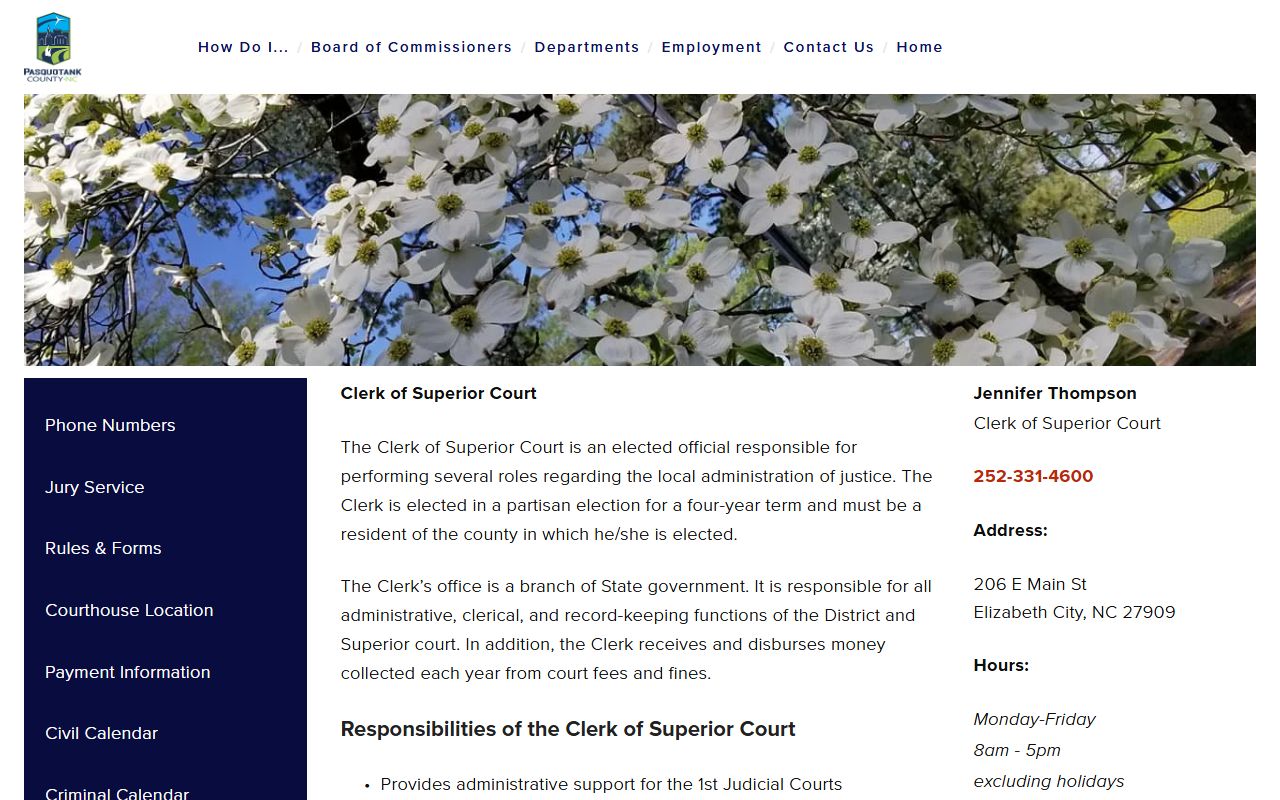
That county page is useful because it confirms the office name, local clerk, address, phone number, and county-published hours before a visitor relies on statewide court links.
What the Clerk Does in Pasquotank County
The Clerk of Superior Court supports the 1st Judicial Courts and keeps the local case records that make the courthouse searchable. The office maintains civil and criminal records, collects and disburses court-related money from fees and fines, maintains bond issue records, and keeps records involving divorce proceedings, juvenile and domestic relations, adoptions, and custody matters. The same clerk office provides estate support to family members and attorneys, appoints and supervises guardians for minors and adults in need, invests certain funds for minors from wrongful death and personal injury matters, issues foreclosure orders, and handles passport applications.
- Maintains Superior Court and District Court civil, criminal, domestic, juvenile, estate, and special proceeding records.
- Provides local access to paper court files and public self-service terminal searches.
- Collects court costs, fines, fees, and other money connected to court proceedings.
- Acts as ex officio judge of probate for estate administration, guardianships, and related clerk-heard matters.
The office should not be confused with the Pasquotank County Register of Deeds. The Register of Deeds handles marriage licenses, birth and death certificates, land records, plats, military discharges, and other recorded county documents. Divorce judgments, probate files, criminal cases, civil lawsuits, traffic cases, and court dockets are clerk records, not Register of Deeds records.
The North Carolina Judicial Branch court officials overview explains how clerks, magistrates, judges, and other court officers fit into the statewide court system.
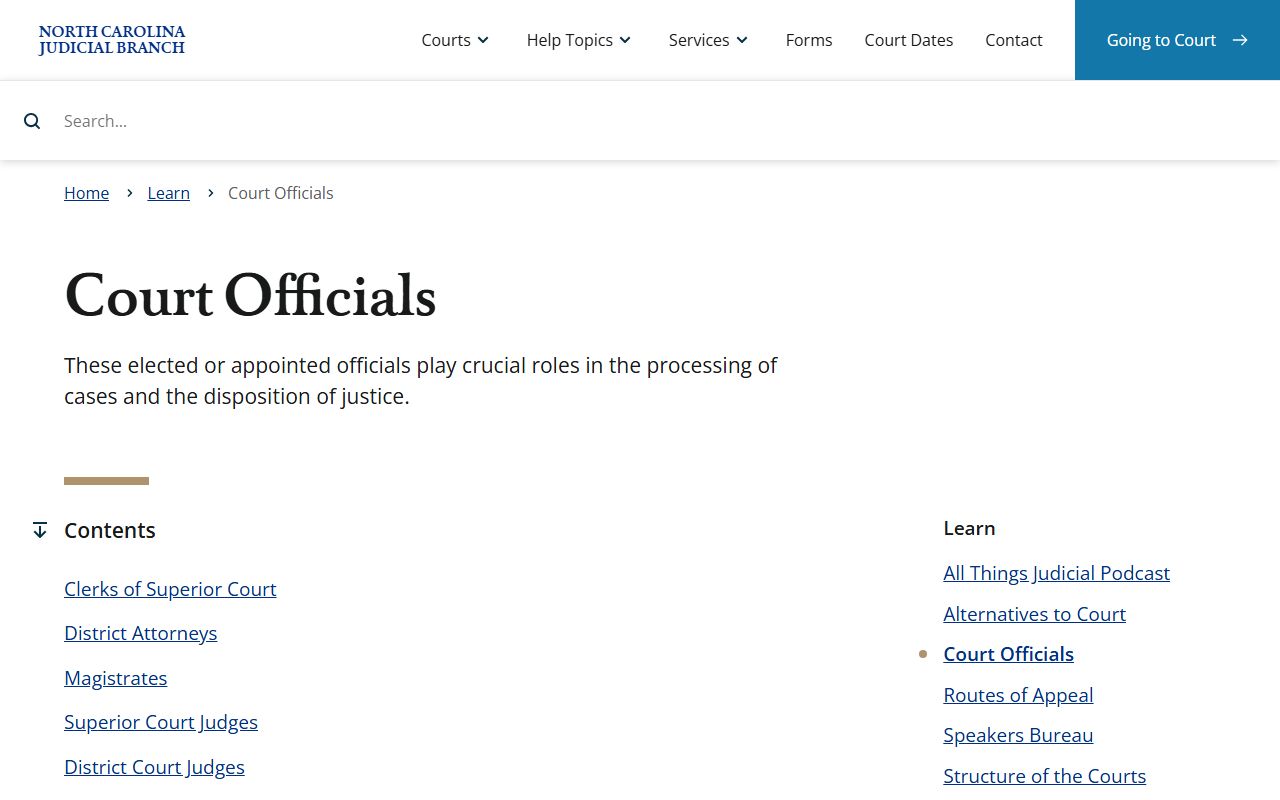
That statewide context matters in Pasquotank County because the clerk office is local, but the recordkeeping rules, forms, and court technology are part of the North Carolina Judicial Branch.
How to Request a Certified Copy
A certified court copy is a copy issued by the clerk with official certification that it matches the court record. People often need certified copies for divorce judgments, estate orders, criminal dispositions, name-change or custody orders, and other documents that must be shown to another agency. The first step is identifying the case as precisely as possible. NC eCourts Portal Smart Search may help locate the case number, party names, filing date, case type, and county location. If the case does not appear online, the clerk's public terminal or staff can help determine whether the file is in Pasquotank County.
- Search the NC eCourts Portal or ask the clerk office to identify the case number, party names, and document needed.
- Confirm that the document is public and held in Pasquotank County. Paper files are viewed at the clerk office in the county where the case is located.
- Request the specific plain or certified copy from the Clerk of Superior Court and ask staff to confirm the current fee before payment.
- Provide payment and delivery information if the office can mail the copy, or plan to pick it up at the courthouse after processing.
For criminal background checks, the Judicial Branch directs people to use the county clerk's office instead of relying only on casual Portal searches. The public terminal can search criminal cases by defendant name, case number, or victim/witness name. Civil, special proceeding, and estate case information is also available through public terminals, although sealed, juvenile, adoption, expunged, and confidential materials are not ordinary public records.
Records Request Form Fields
No Pasquotank-only online copy request form was captured in the research. A clear written request should still include enough information for clerk staff to locate the file and determine whether the requested document is public. If a current Judicial Branch or clerk form is required for a particular document, use the form staff identifies rather than mailing an informal note.
| Field | Required | Notes |
|---|---|---|
| Case Number | Recommended | Portal accepts a record number, and an exact case number is the fastest way to avoid wrong-name matches. |
| Party Names | Yes | Use full names and, for name searches, the Last, First Middle Suffix format expected by Portal when available. |
| Document Type | Yes | Examples include divorce judgment, criminal disposition, estate order, complaint, judgment, or letters. |
| Number of Copies | Yes | State whether plain or certified copies are needed and how many of each. |
| Case Type or Division | Helpful | Civil, criminal, family, probate, estates, special proceeding, traffic, or juvenile status can route the request. |
| Contact and Delivery | Yes | Provide phone, email, mailing address, and pickup or mailing preference if allowed by the office. |
North Carolina law includes a specific court recordkeeping statute. The N.C.G.S. 7A-109 court recordkeeping statute is one of the legal anchors for clerk-maintained records and public inspection where access is not otherwise prohibited.
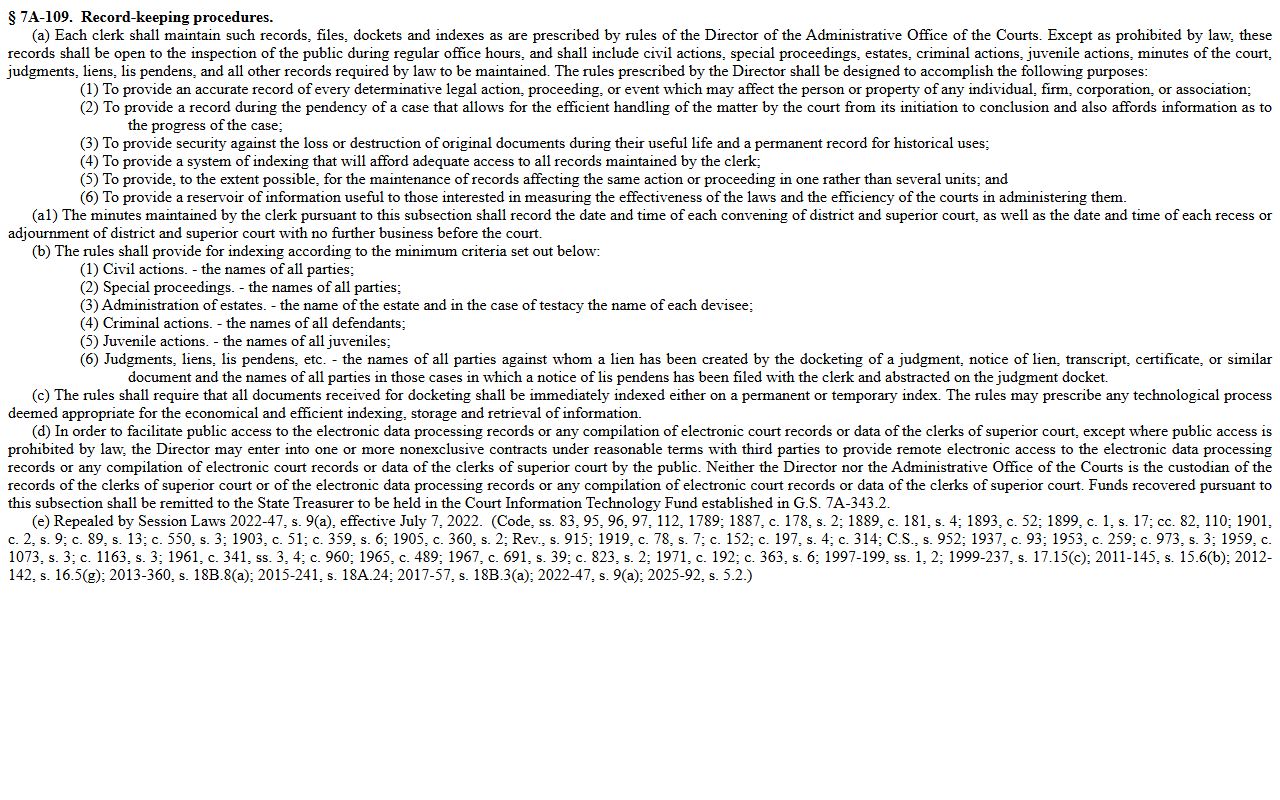
That statute is especially relevant when a Portal search is incomplete, because the clerk remains the official custodian for local court records and indexes.
Pasquotank County Clerk Fees
The research did not locate a Pasquotank-only copy fee table in captured official text. The safe approach is to use the North Carolina Judicial Branch court costs and fee publications and confirm the amount with the clerk before ordering. The statewide court-costs page also matters for fines, fees, online payments, filing costs, and other court-related charges. Portal payment tools accept Visa, MasterCard, and Discover, while the Portal notice says Apple Pay, Google Pay, Cash App, Venmo, and similar digital payment apps are not accepted.
| Item | Amount |
|---|---|
| Plain court copies | Confirm with the Clerk of Superior Court or current Judicial Branch fee schedule |
| Certified court copies | Confirm with the Clerk of Superior Court or current Judicial Branch fee schedule |
| Civil, divorce, and estate filing fees | Use current North Carolina Judicial Branch costs and fee publications |
| Online payments | Portal payment availability depends on case type and balance |
| Remote Public Access | Licensed RPA users follow the statewide RPA online access fee schedule |
The Judicial Branch court costs page is the better source for current statewide fee publications than guessing a local amount from an older copy table.
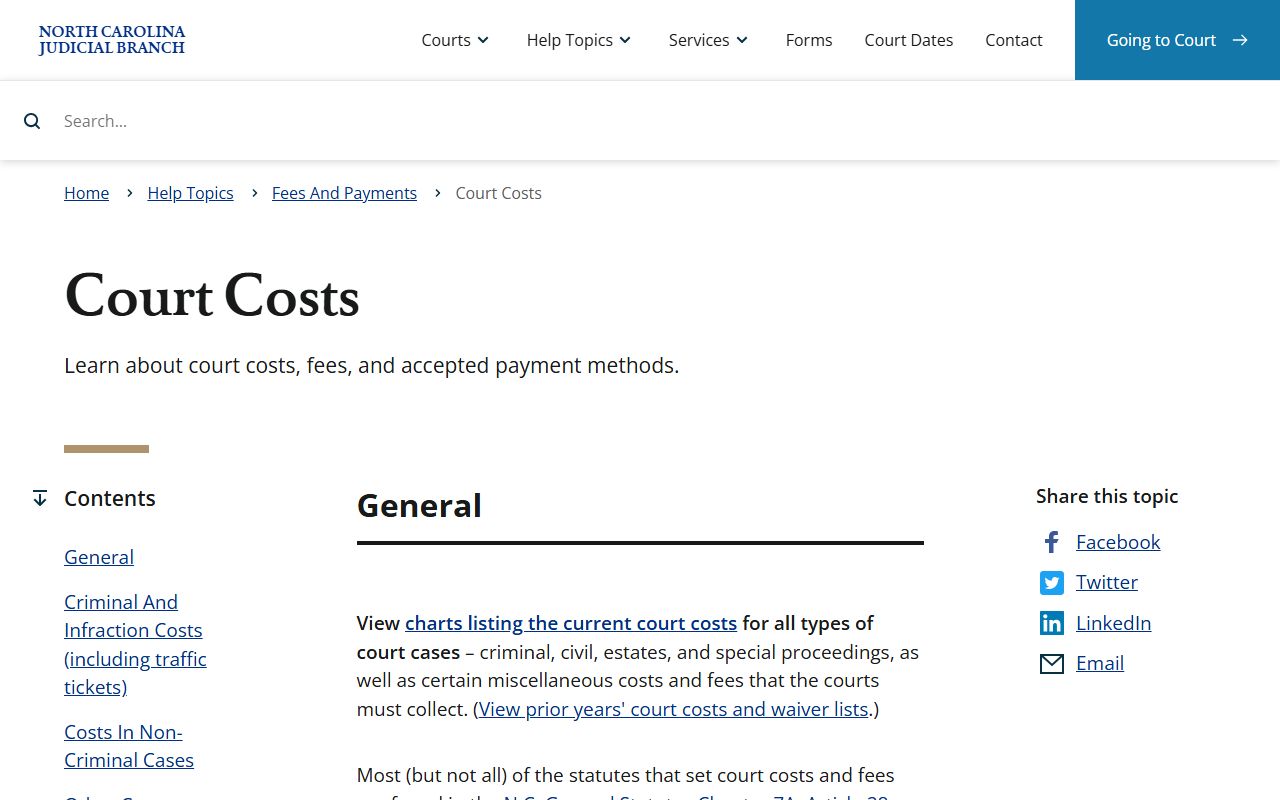
Before paying a Pasquotank County court cost, citation, or copy charge, verify the case number and balance with Portal or the clerk office so the payment is credited to the correct matter.
Common Clerk Forms
North Carolina court forms are generally statewide AOC forms, not Pasquotank-only documents. The Judicial Branch forms search allows searching by keyword, form number, General Statute, or title. Estate forms, divorce packet materials, expunction petitions, civil forms, guardianship forms, and other clerk-filed documents should come from the official forms system or from the Pasquotank local rules and forms page when a local scheduling order or district form applies.
- North Carolina Judicial Branch Forms - statewide court forms search for civil, criminal, estates, guardianship, divorce, and special proceeding forms.
- Pasquotank County Local Rules and Forms - local scheduling orders and district forms tied to Pasquotank County court practice.
The statewide court forms search is the main place to locate official AOC forms by title, statute, keyword, or form number.
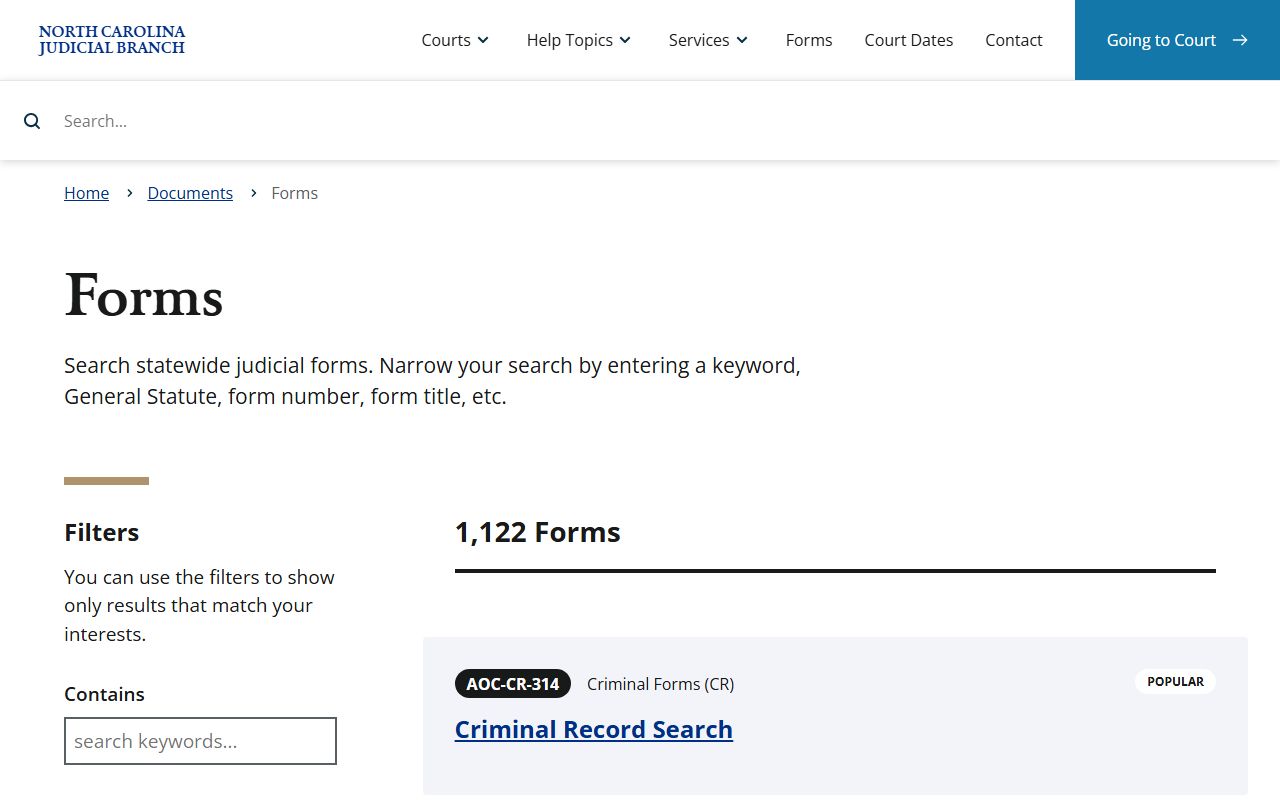
Using current statewide forms helps avoid rejected filings, especially for estates, divorce, expunction, and special proceeding matters handled through the clerk.
Mail and Online Filings
The main online public access path for Pasquotank County court information is the NC eCourts Portal. Portal tools include Smart Search, Search Hearings, Make Payments, and NC Judgment Search. Smart Search can locate public case information and some documents by record number, party name, attorney, citation, business name, cross-reference number, and other filters. Search Hearings can locate court dates by county, hearing type, case number, party name, attorney, judicial officer, or courtroom. Portal access requires JavaScript and cookies, and public users may see a CAPTCHA challenge during anonymous or registered searches.
Online access does not replace the Clerk of Superior Court. Some public documents are not online, some older paper files require in-person inspection, and some records are restricted by law. Court documents should be requested from the clerk in the county where the case was filed. For Pasquotank County, use the courthouse address at 206 E Main St, Elizabeth City, NC 27909, or the Judicial Branch mailing address at Pasquotank County Courthouse, PO Box 449, Elizabeth City, NC 27907. For case-specific help, the Portal directs users to the clerk in the county where the case is assigned or to ecourts@nccourts.org for Portal issues.