
Pasquotank Probate Court
North Carolina does not use a separate county probate court in Pasquotank County. The Pasquotank County Clerk of Superior Court acts as ex officio judge of probate. That means the Clerk of Superior Court handles probate functions for estates, wills, guardianships, and related clerk-heard matters. The local probate contact is the Clerk of Superior Court at 206 E Main St in Elizabeth City, with the main phone number (252) 331-4600 and estates email Pasquotank.Estates@nccourts.org.
The North Carolina Judicial Branch wills and estates topic explains statewide estate concepts. The estates page states that a will has no legal effect until it is probated by a court, usually the clerk of superior court. In Pasquotank County, that local office is also the place to ask about paper estate files, copies, forms, and public terminal access when online search does not show the needed document.
The Judicial Branch wills and estates page introduces the statewide probate and estate help topic used by Pasquotank County residents.
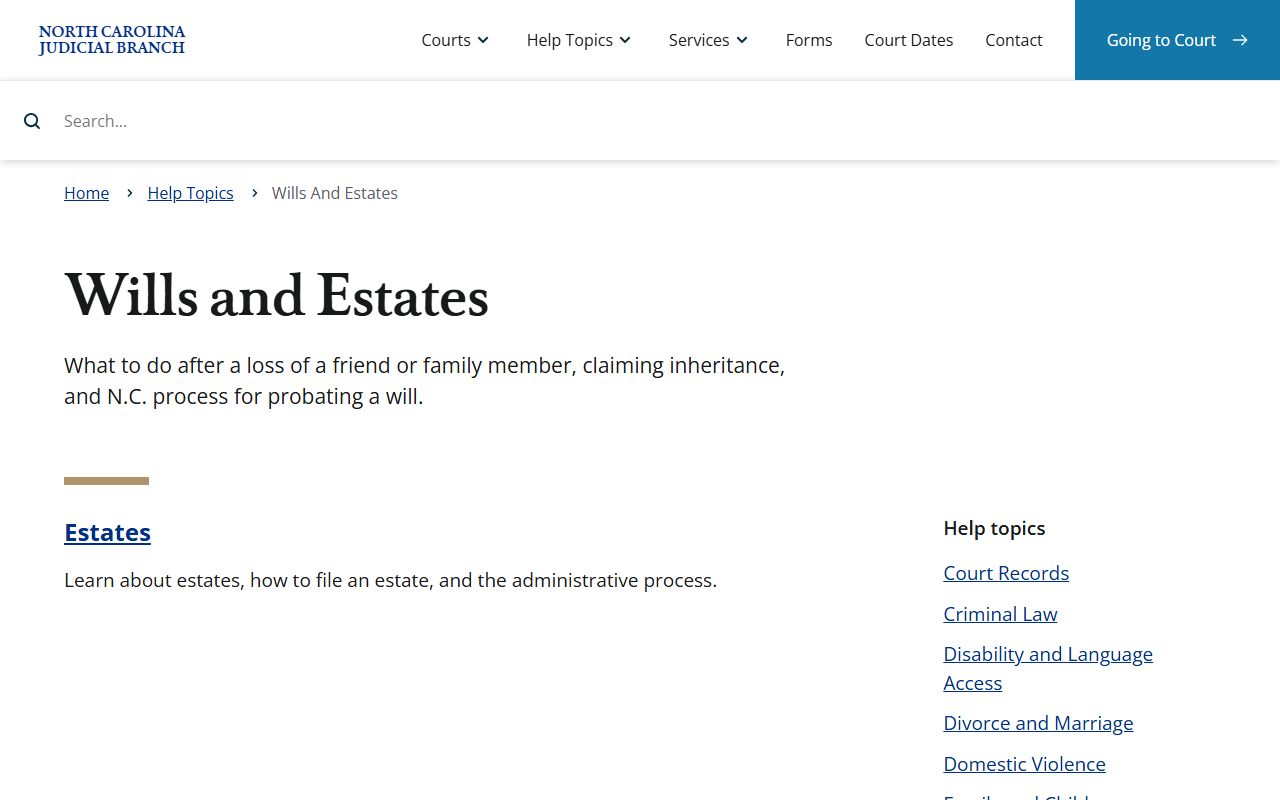
That statewide source pairs with the local clerk office because Pasquotank probate filings are handled inside the North Carolina court system.
Pasquotank County Clerk of Superior Court
206 E Main St
Elizabeth City, NC 27909
(252) 331-4600
Estates email: Pasquotank.Estates@nccourts.org
Probate Terms Defined
Probate words can be plain once tied to the court task. In Pasquotank County, these terms usually appear in estate forms, clerk orders, inventories, accountings, and guardianship records. A term may also affect who can request a copy, sign a form, or act for an estate.
- Testator
- A person who made a will.
- Executor
- A person named in a will to carry out estate duties after court authority is granted.
- Administrator
- A person appointed to handle an estate when there is no executor able to serve.
- Intestate
- Dying without a valid will that controls the estate.
- Guardianship
- A court-supervised role for a minor or adult who needs legal protection or decision support.
- Conservatorship
- A property-management concept often used in other states; in North Carolina, guardianship and estate statutes should be checked for the correct local term.
Pasquotank Estate Records
Probate records may include a will, application for probate, letters testamentary or letters of administration, appointment of an executor, administrator, or personal representative, inventory, accountings, creditor claims, notices, spouse's year's allowance, small estate filings, guardianship or incompetency filings, minor estate funds, and special proceedings tied to trusts or estates. The clerk page also states that the office provides estate support to family members and attorneys, appoints and supervises guardians, invests funds for minors from settlements, and issues foreclosure orders.
The Judicial Branch estates page explains estate administration, probate, and how a will becomes legally effective through court action.
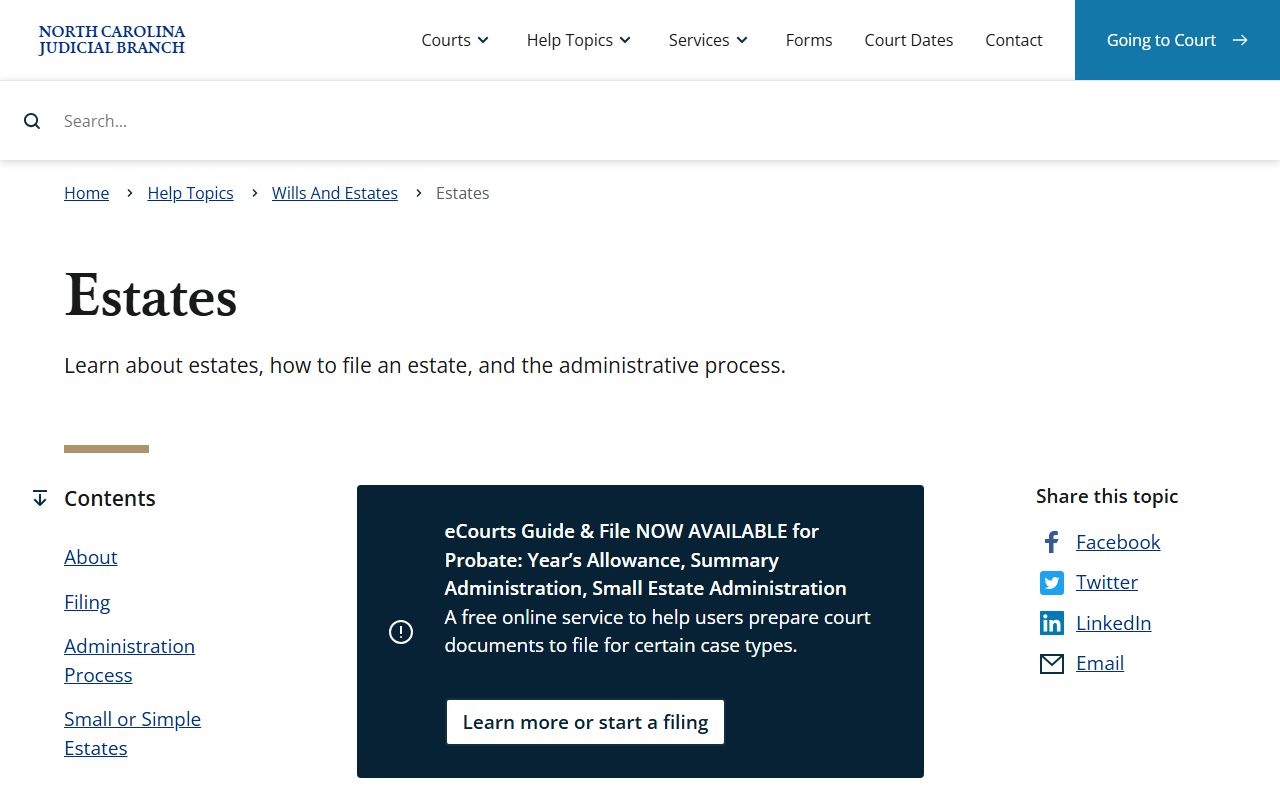
Estate administration guidance is useful for Pasquotank probate searches because the same filing stages often appear in the court record.
Search Pasquotank Probate Records
Probate and estate records may be searched through more than one access channel. The NC eCourts Portal Smart Search can include probate, estate, and special proceeding records where indexed and public. Search Hearings includes a Probate or Mental Health hearing category in the research. Public terminals at clerk offices provide access to civil, special proceeding, and estates information. Paper estate files must be viewed through the clerk in the county where the case is located.
- Search the NC eCourts Portal by record number, decedent name, party name, or other available case criteria.
- Filter to Pasquotank County when location filtering is available.
- Use case type, case status, and file date filters to narrow older or common-name results.
- Use Search Hearings when a probate or mental health hearing date is the question.
- Use the public terminal or clerk office when the online record does not show the document needed.
- Request copies from the Pasquotank Clerk of Superior Court when the paper file or certified copy is required.
| Field Label | Type | Required | Notes |
|---|---|---|---|
| Record Number / Name | Text | One term required | Search estate by record number or party/decedent name if indexed. |
| Location | Dropdown | Optional but recommended | Select Pasquotank County. |
| Case Type | Dropdown | Optional | Use probate, estate, or special proceeding type if available. |
| Case Status | Dropdown | Optional | Open, closed, or other statuses if visible. |
| File Date Start/End | Date | Optional | Useful for older estate searches. |
| Hearing Type | Dropdown in Search Hearings | Required for hearing search | Probate or Mental Health category shown. |
Estate Forms and Letters
The North Carolina Judicial Branch forms search supports searches by keyword, General Statute, form number, or form title. Estate form types include AOC-E forms. Examples captured in research include AOC-E-506 Account, AOC-E-212 Estate Tax Certification, AOC-E-213 Renunciation and Waiver of Spousal Year's Allowance, AOC-E-214 Certificate of Service, and AOC-E-300 forms. The correct form depends on the estate stage and clerk instructions.
A common probate flow starts by deciding whether the decedent was domiciled in Pasquotank County or owned probate assets requiring local administration. The filer then contacts the Estates division or Clerk of Superior Court, uses official AOC estate forms, files the will or application with required documents, and waits for the clerk to admit the will if legally valid and issue authority to the personal representative when requirements are met.
After authority is granted, the personal representative inventories assets, gives required notices, pays valid claims and costs, files accountings, and distributes remaining property. Portal or terminal searches can help track public estate records, but paper files and certified copies still run through the clerk when online documents are incomplete.
Probate Fee Status
The research did not capture a Pasquotank-specific probate fee schedule with current amounts. The correct approach is to use the North Carolina Judicial Branch costs and fees publication or contact the Pasquotank Clerk of Superior Court before filing. Do not treat an old county notice or a third-party fee summary as the current filing amount. Certified and plain copies are available for a fee, but the exact local copy amount was not captured in the official source text.
| Probate item | Fee status |
|---|---|
| Estate filing / probate costs | Fee not located in captured official Pasquotank source; use current NC Judicial Branch costs and fees publication. |
| Certified/plain copies | Fee not located in captured official Pasquotank source; confirm with the clerk. |
| Forms | Judicial Branch forms search is public; filing fees may apply when forms are submitted. |
The Pasquotank County delinquent tax lien notice page illustrates how local public-record and foreclosure-related notices can intersect with clerk-supervised proceedings.
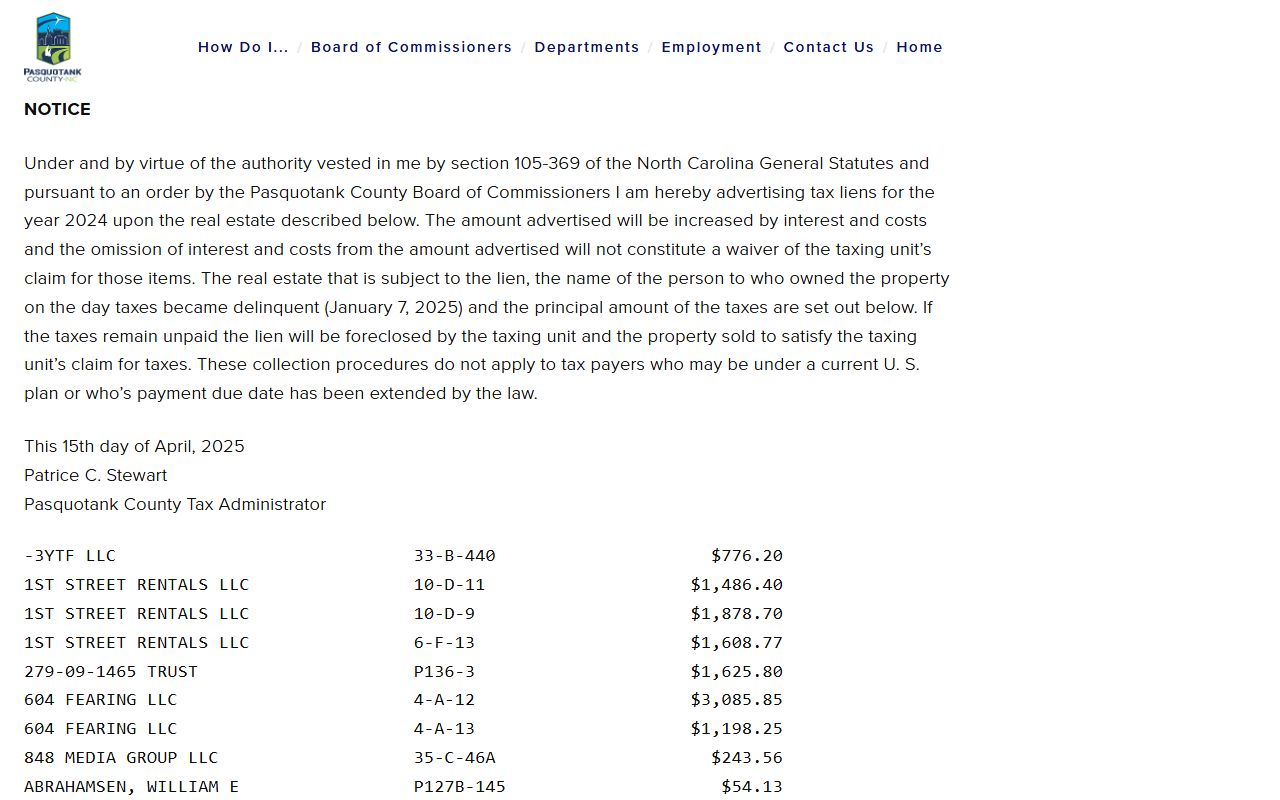
That local source does not set probate fees, but it helps show why estate, lien, foreclosure, and clerk records can overlap in real public-record work.
Restricted Probate Records
Many estate files are public, but probate-related access is not unlimited. Guardianship, incompetency, minor estate funds, and mental health matters may include confidential or restricted content. The Portal hearing category can include Probate or Mental Health, but that does not mean every document in those matters is open to public download. A public terminal may show case information while still limiting documents or sensitive data.
For copies, the distinction is practical. If the record is an ordinary public estate file, the clerk may provide inspection or copies subject to fees and availability. If the record involves a minor, guardianship, incompetency, sealed material, mental health content, or protected personal identifiers, the clerk may limit access or require a court order. Pasquotank County probate records should be requested with the case number, decedent or party name, and the specific document needed.
The North Carolina Recovery Courts page was assigned to this probate page in the manifest as a related court-program source.
It is not an estate filing source, so probate requests should still be directed to the Clerk of Superior Court and official estate forms.
Note: Mental health and guardianship records require caution because the hearing label may be public while sensitive documents remain restricted.