
Pasquotank County Arrest Records and Charges
Pasquotank County arrest records start on the law-enforcement side. They may relate to the arresting agency, booking, custody status, bond review, or jail intake. Court charges begin when a charge is filed with the court through a citation, criminal summons, warrant, indictment, information, or other charging paper. The court charge record is narrower than the full case file because it focuses on the accusation and status of each count. For custody and booking paths, the related jail lookup belongs with Pasquotank County inmate records.
The Clerk of Superior Court keeps the court file once charges are filed. Pasquotank County criminal matters can appear in District Court for misdemeanors, infractions, first appearances, and lower-level proceedings, while felonies proceed in Superior Court. The District Attorney for Prosecutorial District 1 handles prosecution decisions. The prosecutor may proceed on the original charge, amend a charge, dismiss a charge, seek indictment, or negotiate a plea. The full case file and sentence are handled with Pasquotank County criminal court records.
The North Carolina public records definition is one assigned source for the public-record framework around arrest records and court charges.
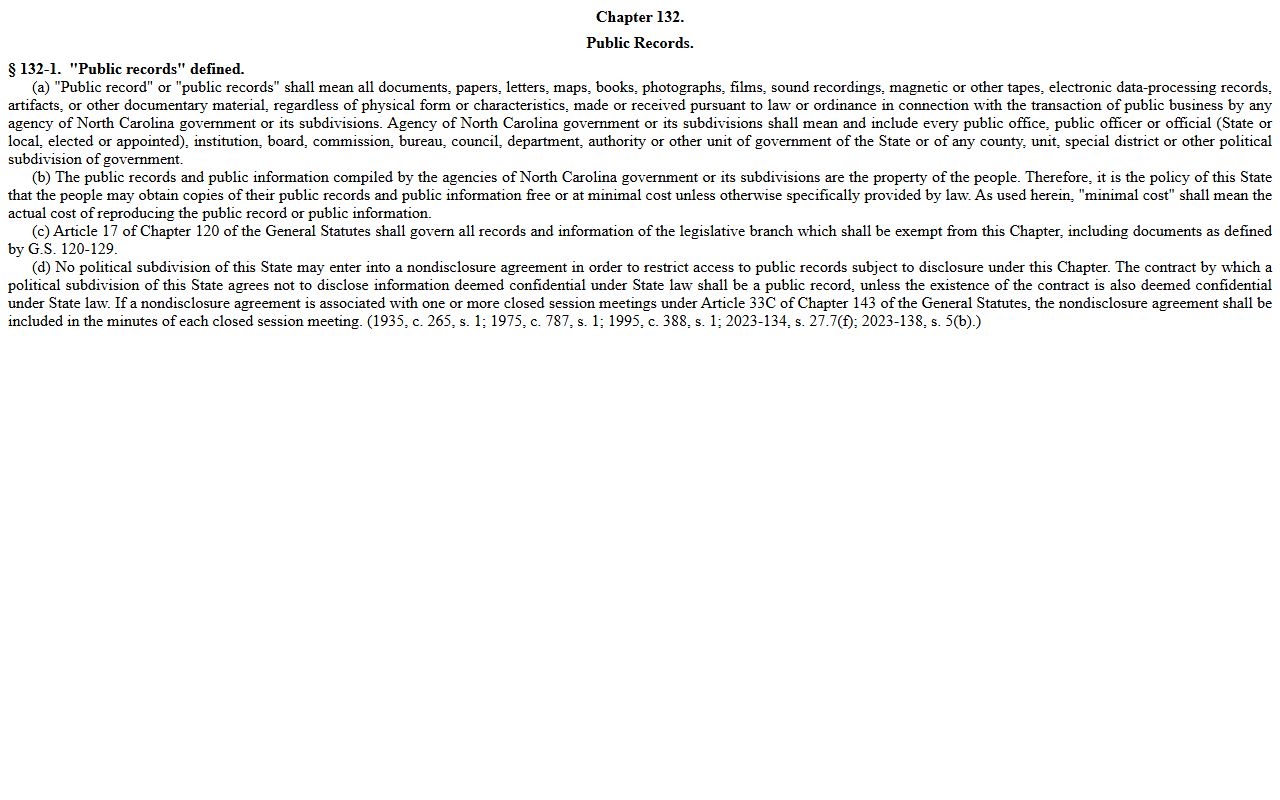
That public-record definition helps separate court records from sheriff records, jail records, and other agency material.
Pasquotank Arrest vs Charge Records
An arrest record documents that a person was taken into custody or processed in connection with an alleged offense. It does not by itself show that the person was convicted. A court charge record documents the formal accusation in the court system. One arrest can produce no filed charge, one filed charge, or several charges. A court record may also exist when a person receives a citation or criminal summons without being booked into jail.
| Record Type | Custodian | What It Usually Shows | Where to Start |
|---|---|---|---|
| Arrest or booking record | Sheriff, police, or jail | Arrest event, custody status, agency, booking path, and notification options if available. | Pasquotank County Sheriff's Office, Albemarle District Jail, or VINELink. |
| Court charge record | Clerk of Superior Court | Charge, statute, case number, court events, bond, hearing, status, and disposition if resolved. | NC eCourts Portal, clerk public terminal, or clerk paper file. |
| Full criminal case file | Clerk of Superior Court | Pleas, motions, orders, judgments, sentence, probation, costs, and appeal activity. | Portal and the Pasquotank County Clerk of Superior Court. |
Pasquotank County participates in Albemarle District Jail for local custody, and the jail links inmate lookup to VINELink. The research did not confirm a county mugshot database or a sheriff-run full arrest blotter. Do not assume that a name missing from VINELink means no charge exists, because state court charges and current jail custody are different systems.
Search Pasquotank Arrest Records and Charges
For court charges after arrest, start with the NC eCourts Portal. Use Smart Search for case records and filter by Pasquotank County. The Portal accepts record number, name, citation, attorney, business name, and advanced filters. For hearings, use Search Hearings to check court dates by case number, party name, attorney, judicial officer, or courtroom. If online results are limited, the clerk's public terminal can search criminal cases by defendant name, case number, or victim or witness name.
- Search the Portal by defendant name, record number, or citation number.
- Filter by Pasquotank County to avoid statewide matches with the same name.
- Open the case and read each listed charge, statute, level, bond detail, and status.
- Check Search Hearings for upcoming settings tied to the charge or missed court dates.
- Use the clerk's office for paper files, certified copies, or records not visible online.
For arrest-side information, use the Pasquotank County Sheriff's Office and Albemarle District Jail channels. The Sheriff's Office page links to VINELink, Most Wanted, civil process, permits, forms, and public-safety resources. The Sheriff's Office also advertises a Pasquotank County Sheriff NC app for tips, crime reporting, and public-safety information, but the research did not confirm an app-only arrest or warrant lookup.
Pasquotank Charges After Arrest
Court charges after arrest move from accusation to formal case tracking through specific charging papers. North Carolina records may involve citations, warrants, criminal summonses, indictments, informations, or returned process. In Pasquotank County, the charging paper becomes part of the court record when it is filed or returned in the case. The District Attorney then handles prosecution decisions, while the clerk keeps the filed record and case history.
| Charging Document | Common Use | What to Check in the Record |
|---|---|---|
| Criminal summons | Directs the defendant to appear without immediate custody. | Issue date, offense, court date, and service or return status. |
| Arrest warrant | Authorizes arrest on a criminal charge. | Charge, issuing official, served or returned date, bond, and court setting. |
| Citation | Common for traffic, infraction, and some misdemeanor matters. | Citation number, offense, court date, waiver or payment eligibility, and disposition. |
| Information | Formal prosecutor-filed charging document in some cases. | Filed count, statute, prosecutor action, and case number. |
| Indictment | Formal felony charge returned by a grand jury. | Returned date, count list, felony level, arraignment, and Superior Court activity. |
The criminal investigation and returned warrant statute is an assigned source for returned criminal process.
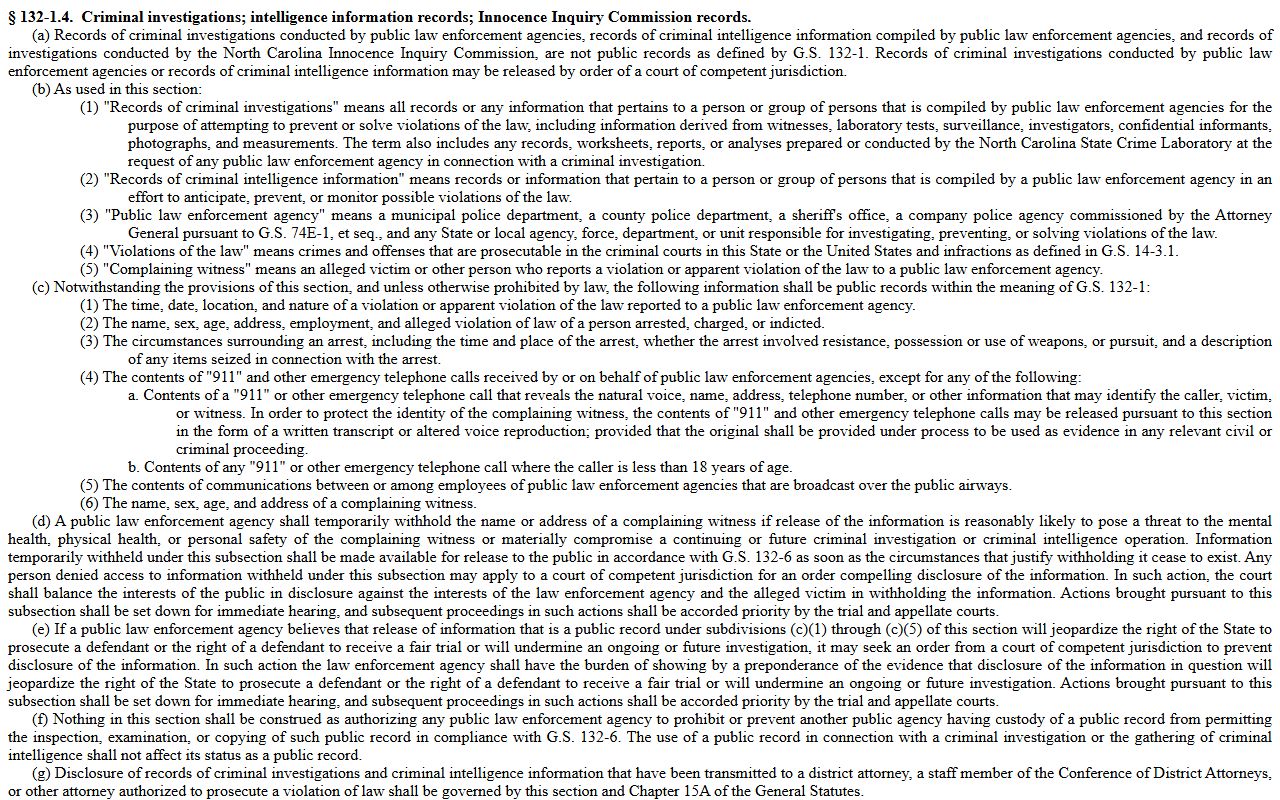
Returned arrest warrants, returned search warrants, indictments, and criminal summonses are treated as public court records unless sealed by court order.
Pasquotank Charge Status Terms
Charge status can change. An original arrest charge may be amended, reduced, dismissed, superseded by indictment, or resolved by plea. A charge may also remain pending while the case awaits hearing, grand jury action, trial, or plea. Read each count separately because one count may be dismissed while another count leads to judgment. A status label is not the same thing as a sentence.
| Status | What It Means | Why It Matters |
|---|---|---|
| Pending | The charge remains open and has not reached final disposition. | Future hearing, plea, trial, or dismissal activity may still occur. |
| Amended | The filed charge was changed by court or prosecutor action. | The final charge may differ from the arrest-side description. |
| Reduced | A more serious charge was lowered to a lesser offense. | The disposition may be tied to the reduced count, not the original allegation. |
| Dismissed | The charge did not proceed to conviction in that case. | Dismissal is not always automatic expunction from public access. |
| Guilty or judgment entered | The charge resulted in a conviction or final judgment. | Sentence, probation, costs, or DMV consequences may follow depending on the offense. |
Some North Carolina terms need local review. Prayer for judgment continued, probation, responsible, waived, dismissed with leave, and other entries can have specific effects. When the status is unclear, use the Clerk of Superior Court for the record and a qualified attorney for legal advice.
Pasquotank DA and Defender Context
The District Attorney for Prosecutorial District 1 is Jeff Cruden. The district includes Camden, Chowan, Currituck, Dare, Gates, Pasquotank, and Perquimans counties. The Pasquotank Judicial Branch contact directory lists the District Attorney at (252) 331-4530. The DA's office is at the Public Safety Building, 200 E. Colonial Ave, Elizabeth City, NC 27909. The prosecutor is not the record custodian, but prosecutor action can affect the charge list, amendments, dismissals, plea negotiations, and trial posture.
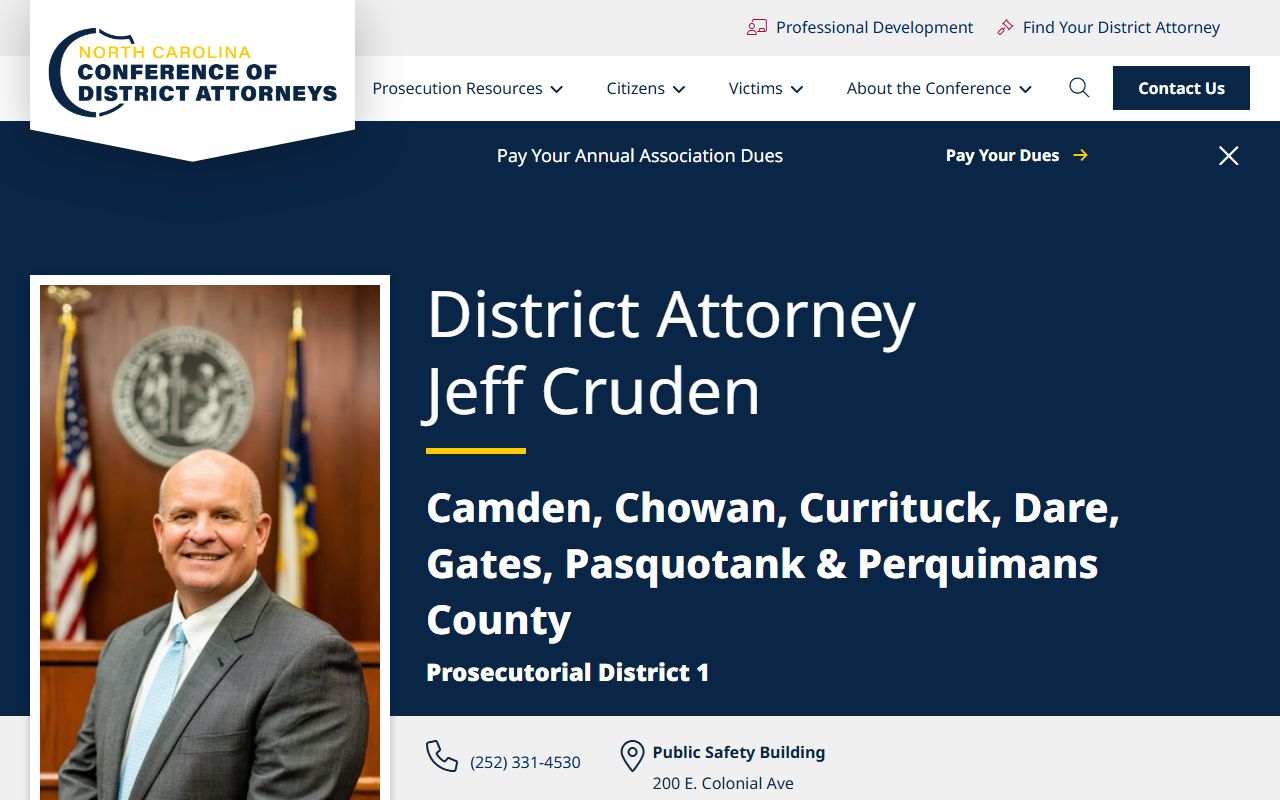
The District Attorney source explains who handles prosecution decisions for charges filed in Pasquotank County.
The NC Indigent Defense Services Pasquotank page names Public Defender Thomas P. Routten for Defender District 1. The office phone is (252) 331-4650. IDS provides representation for eligible indigent defendants and others entitled to counsel. Public defender involvement can appear in court events or attorney fields, but case copies and public record lookup still route through the clerk and Portal.
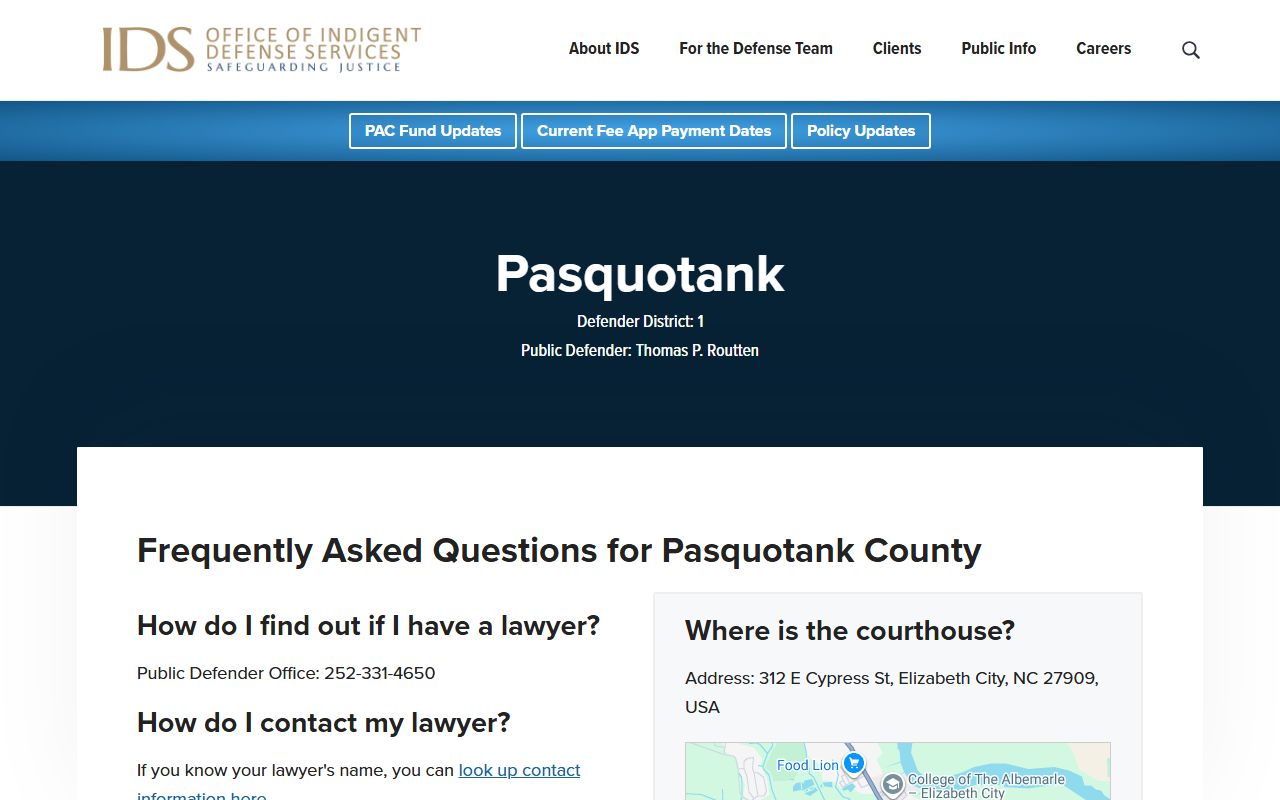
The public defender source gives the defense-side context for defendants facing Pasquotank County court charges after arrest.
Pasquotank Charges vs Convictions
An arrest and a charge are not convictions. A charge is an allegation filed in court. A conviction occurs only after a guilty plea, guilty verdict, or other final judgment that counts as a conviction. This distinction is crucial in Pasquotank County arrest records because early records can be incomplete or later changed. Always read the disposition and sentence fields before treating a charge as a proven result.
| Point | Charge | Conviction |
|---|---|---|
| Basic meaning | An accusation filed with the court. | A final guilty result or judgment. |
| Timing | Appears near the start of a case. | Appears after plea, trial, or judgment. |
| Effect | May be pending, amended, reduced, or dismissed. | May carry sentence, probation, costs, and collateral effects. |
| How to verify | Check the charge list and status. | Check disposition, judgment, and sentence fields. |
For statewide criminal-history needs, the court file is only one source. NC Department of Adult Correction offender searches cover state prison offenders, probationers, and parolees, but the DAC source says it does not include county jail information. A formal background check should use the proper clerk or authorized background-check process instead of a casual name search.
Restricted Pasquotank Charge Records
Not every arrest or charge record is public. Juvenile records are handled under Article 30 of Chapter 7B and are not ordinary public lookup records. Sealed files, expunged cases, confidential personal identifiers, adoption matters, mental health content, and sensitive law-enforcement investigation material may be blocked or redacted. Active, unserved, or investigation-sensitive warrant material may also be withheld until it is returned or otherwise becomes part of a public court record.
Expunction is the legal process that removes eligible criminal records from public access. North Carolina has many expunction rules, including a statute for certain nonviolent misdemeanor and felony convictions. Eligibility depends on the charge, outcome, prior record, waiting period, and statute. A dismissed charge does not always vanish on its own. The person may need to file the correct petition and obtain an order.
| Point | Sealed | Expunged |
|---|---|---|
| Public access | Closed from ordinary public inspection. | Removed from ordinary public access after processing. |
| Source | Court order or specific confidentiality law. | Statutory expunction petition, review, and order. |
| Common record effect | Search may show limited detail or no detail. | Public search should not show the cleared matter after completion. |
| Local path | Ask the clerk why access is limited. | Use the Clerk of Superior Court and Judicial Branch expunction forms. |
Important: This private site is not a consumer reporting agency and cannot be used for FCRA-regulated screening decisions.