
Pasquotank County Court Dockets Defined
A court docket is the case activity log and calendar trail. In Pasquotank County, docket information may show scheduled hearings, filing events, continuances, orders, judgments, and other case activity in Superior Court, District Court, estate matters, traffic matters, and other public proceedings. A docket helps answer when a case is set, what happened last, and what event may come next. It does not always show the full text of a motion, complaint, exhibit, evidence item, or signed order.
The distinction is practical. A docket entry might say that a motion was filed, a hearing was continued, or judgment was entered. The full record is the underlying file held by the Clerk of Superior Court, which may include the filed motion, signed order, judgment, exhibits, notices, and other documents. Pasquotank County docket search is the fast way to track progress. The full court record is the better source when a person needs legal detail, certified copies, or the exact language of a court order.
Note: A docket entry can confirm that an event happened, but the full case file explains what the event legally means.
Search Pasquotank County Court Dockets Online
Pasquotank County court dockets are searched through the NC eCourts Portal. For hearing dates, use Search Hearings. For case activity and docket events, use Smart Search and open the case detail. The Portal home also includes Make Payments and NC Judgment Search, but those tools serve different tasks. Hearing search is best when the goal is a date, time, hearing type, courtroom, judicial officer, or party calendar. Smart Search is best when the goal is the case record and event history.
- Open the NC eCourts Portal and choose Search Hearings for court dates or Smart Search for case docket entries.
- Select Pasquotank County in the location field so the search does not return hearings from other North Carolina counties.
- Choose the hearing type if using Search Hearings, such as civil, criminal, family, probate, or mental health when available.
- Choose a search type, such as case number, party name, business name, attorney name, attorney bar number, judicial officer, or courtroom.
- Open the result and compare the hearing information with any case detail, docket event, or document link shown in the public view.
The Pasquotank County local rules and forms page is a companion source for scheduling orders and local forms. Docket users should check it when a calendar event is tied to local practice or a standing order.
Local rules do not replace a live docket, but they explain why certain civil, family, or district court events may be scheduled in a specific way.
Pasquotank County Hearing Search Fields
The Search Hearings tool is narrower than Smart Search. It is built around location, hearing type, and search type. Pasquotank County should be selected as the location when the user needs the local docket. Search types can change the fields that appear. A party-name search asks for name fields, while judicial officer and courtroom searches depend on dropdown choices. The research capture shows a statewide judicial-officer dropdown and a courtroom search type, so results should be checked carefully for the correct county and court session.
| Field Label | Type | Required | Notes / Format |
|---|---|---|---|
| Select Location | Dropdown or list | Yes | Choose Pasquotank County rather than All Locations for a local docket search. |
| Select Hearing Types | Dropdown or list | Yes | All Hearing Types, Civil, Criminal, Family, and Probate or Mental Health were captured. |
| Select Search Types | Dropdown or list | Yes | Case Number, Party Name, Business Name, Attorney Name, Attorney Bar Number, Judicial Officer, or Courtroom. |
| Last Name / First Name | Text | Conditional | Used for party-name searches; middle name is optional. |
| Sounds Like | Checkbox | No | Helps with phonetic or name-variant searches. |
| Judicial Officer | Dropdown | Conditional | Used when that search type is selected. |
| Courtroom | Dropdown | Conditional | Used to search docket settings by courtroom when available. |
The Portal training and resources page supports users who need help with Portal navigation, eCourts account access, or public search functions.
Training materials are useful when a hearing search fails because the wrong search type or location filter was selected.
Pasquotank County Docket Details
A docket entry is a compact line of case activity. It may identify the event date, event type, hearing date, court location, courtroom, party, attorney, filing, or order. Not every field appears in every case type. A criminal case may show charge-related events, first appearances, pleas, judgments, and financial obligations. A civil case may show complaints, answers, motions, service, continuances, orders, settlement, dismissal, or judgment. Estate and special proceeding dockets can show filings and clerk orders, but restricted guardianship or mental health content may be withheld or limited.
| Field | What It Shows |
|---|---|
| Entry date | The date the docket event was filed, entered, or posted to the case. |
| Event type | The label for the action, such as filing, hearing, order, judgment, continuance, or notice. |
| Hearing date and time | The scheduled court appearance, session, or proceeding time. |
| Location / courtroom | The county, courthouse, courtroom, or session assignment when public. |
| Judicial officer | The judge, clerk, magistrate, or officer assigned to a hearing when shown. |
| Party or attorney | The person, business, agency, or lawyer tied to the event. |
| Document link | A public document link if available; absence of a link does not prove no document exists. |
| Disposition or judgment | The outcome entry when a charge, claim, citation, or case has been resolved. |
Pasquotank County Courts With Dockets
Pasquotank County is in Prosecutorial District 1, Superior Court District 1, and District Court District 1. Superior Court and District Court share the Pasquotank County Courthouse in Elizabeth City. Superior Court handles felonies, civil cases over $25,000, appeals from District Court, and many jury matters. District Court handles misdemeanors, infractions, traffic, juvenile, domestic, small claims, magistrate-related matters, and lower civil cases. Magistrates are District Court judicial officers and can be tied to initial criminal process, small claims, and other proceedings.
The Clerk of Superior Court is part of this structure because the clerk keeps the court record and, in North Carolina, also acts as ex officio judge of probate. That means probate and estate docket activity may be tied to the clerk's office rather than a separate county probate court. Jennifer Thompson is the Pasquotank County Clerk of Superior Court, and the local court contact directory lists separate contacts for Superior Court judges, District Court judges, magistrates, the district attorney, and clerk divisions.
| Court or Office | Docket Role | Pasquotank Contact |
|---|---|---|
| Superior Court | Felonies, higher-value civil cases, District Court appeals, and jury matters. | Judges: (252) 331-4501 |
| District Court | Misdemeanors, infractions, traffic, domestic, juvenile, small claims, and lower civil cases. | Judges: (252) 331-4500 |
| Clerk of Superior Court | Record custodian, estates, probate-type matters, copies, public terminal, and paper files. | (252) 331-4600 |
| Magistrates | Initial criminal process, small claims, and assigned District Court duties. | (252) 331-4599 |
| District Attorney | Prosecution docket work in Prosecutorial District 1. | (252) 331-4530 |
Pasquotank Dockets Versus Court Records
A Pasquotank County court docket is a roadmap. A full case record is the file. The docket helps a person see what has been filed, when court is scheduled, whether a judgment or disposition appears, and which event should be checked next. The full case record may be needed to read the complaint, indictment, motion, order, judgment, or estate filing itself. This is why some searches begin in Search Hearings, move to Smart Search, and end at the clerk's office for a copy.
| Question | Docket | Full Case Record |
|---|---|---|
| Primary use | Track events, dates, and status. | Read filed documents and orders. |
| Typical format | Chronological entries or hearing listings. | Case file with pleadings, notices, motions, exhibits, orders, and judgments. |
| Online access | Often available through Search Hearings or Smart Search. | Some documents may be online; others require clerk access. |
| Best for | Finding court dates and checking progress. | Legal review, certified copies, and exact order language. |
| Limits | May omit document text and sealed details. | May require a fee, in-person inspection, or restricted-access review. |
Pasquotank County eCourts Dockets
Pasquotank County was included in North Carolina's eCourts Track 3 transition. The Judicial Branch announcement for that group listed Pasquotank with Beaufort, Camden, Chowan, Currituck, Dare, Gates, Hyde, Martin, Perquimans, Tyrrell, and Washington for the February 5, 2024 transition. That matters for docket search because eCourts shifted public case search, hearing search, eFiling, payments, and digital record workflows into the statewide Portal environment.
The later statewide completion announcement in 2025 confirmed eCourts availability in all one hundred North Carolina counties. For Pasquotank County court dockets, this means public users no longer need to guess whether a county is on the newer platform. The practical question is whether the specific case, event, document, or hearing is public and visible through the Portal. Older paper records, restricted files, sealed events, and some full documents can still require clerk-office access.
The 2025 eCourts statewide completion announcement explains the statewide rollout and the Portal functions now available across North Carolina.
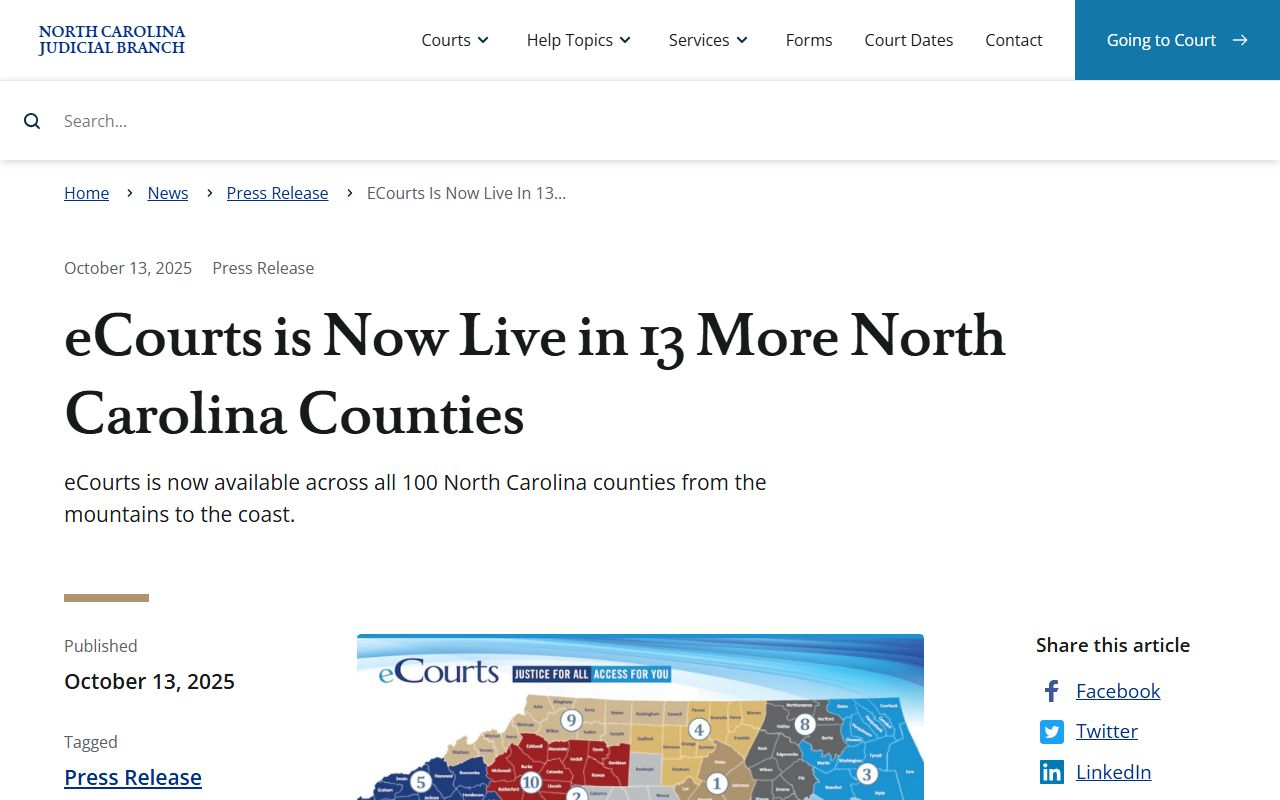
Statewide completion helps users search Pasquotank County docket information with the same public system used for other North Carolina counties.
The Track 3 eCourts transition announcement is the Pasquotank-specific modernization source because it lists the county in the February 2024 rollout group.
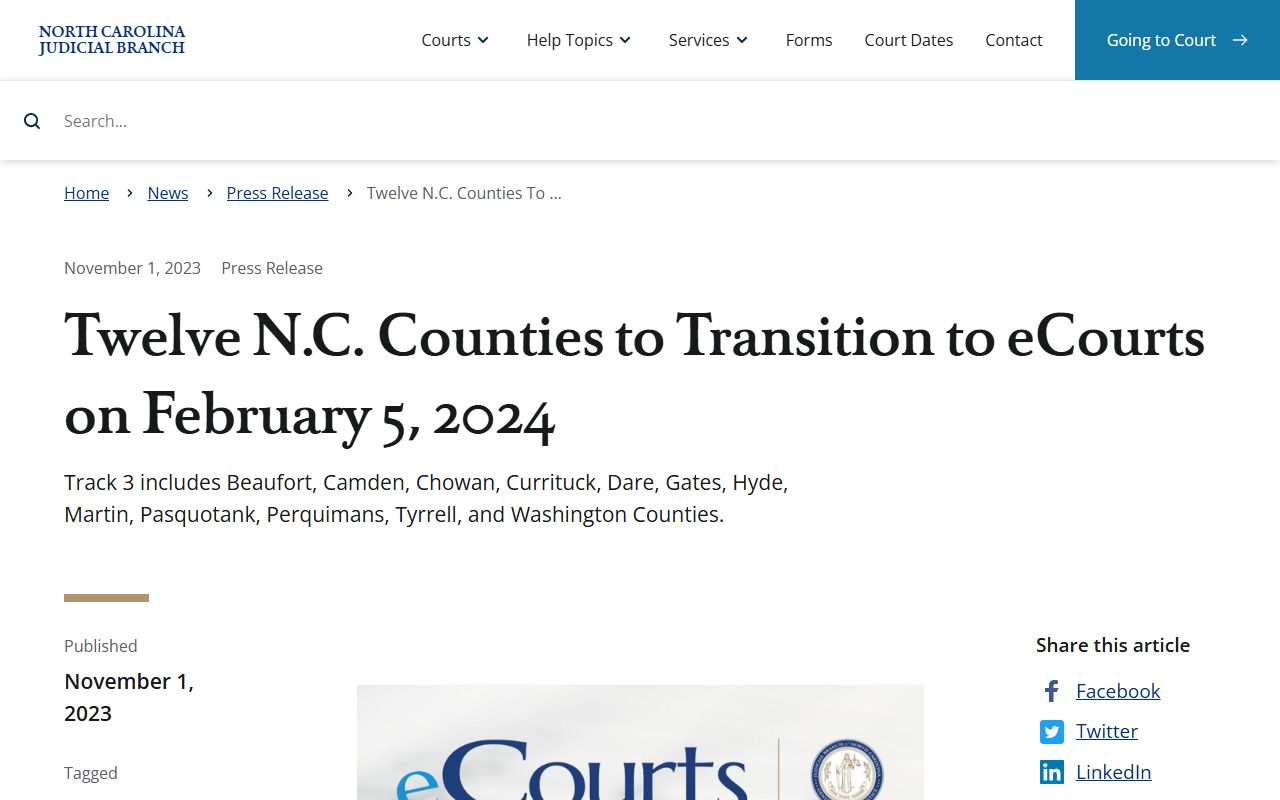
The Track 3 source explains why Pasquotank County docket access is now centered on Portal search tools rather than an older local-only system.
Pasquotank County Dockets And Payments
Docket users often move from hearing search to payment lookup after a traffic, infraction, criminal, probation, or parole matter appears. The Portal Make Payments tool is available for some payable cases. It does not mean every docket entry can be paid online. Users should verify the case number, county, charge, balance, and payment eligibility before making a payment. The Portal notice captured in the research says Visa, MasterCard, and Discover are accepted, while Apple Pay, Google Pay, Cash App, Venmo, and similar digital payment apps are not accepted.
Payments should not be used as a shortcut when a person is required to appear. Some traffic and infraction matters may be waivable, while other criminal, domestic, juvenile, or civil matters require court action. If the docket shows a hearing date, a failure-to-appear issue, or a case status that is not clear, contact the Pasquotank County Clerk of Superior Court before assuming an online payment resolves the case.
The Portal Make Payments dashboard is tied to payable cases, not to every docket entry or hearing setting.
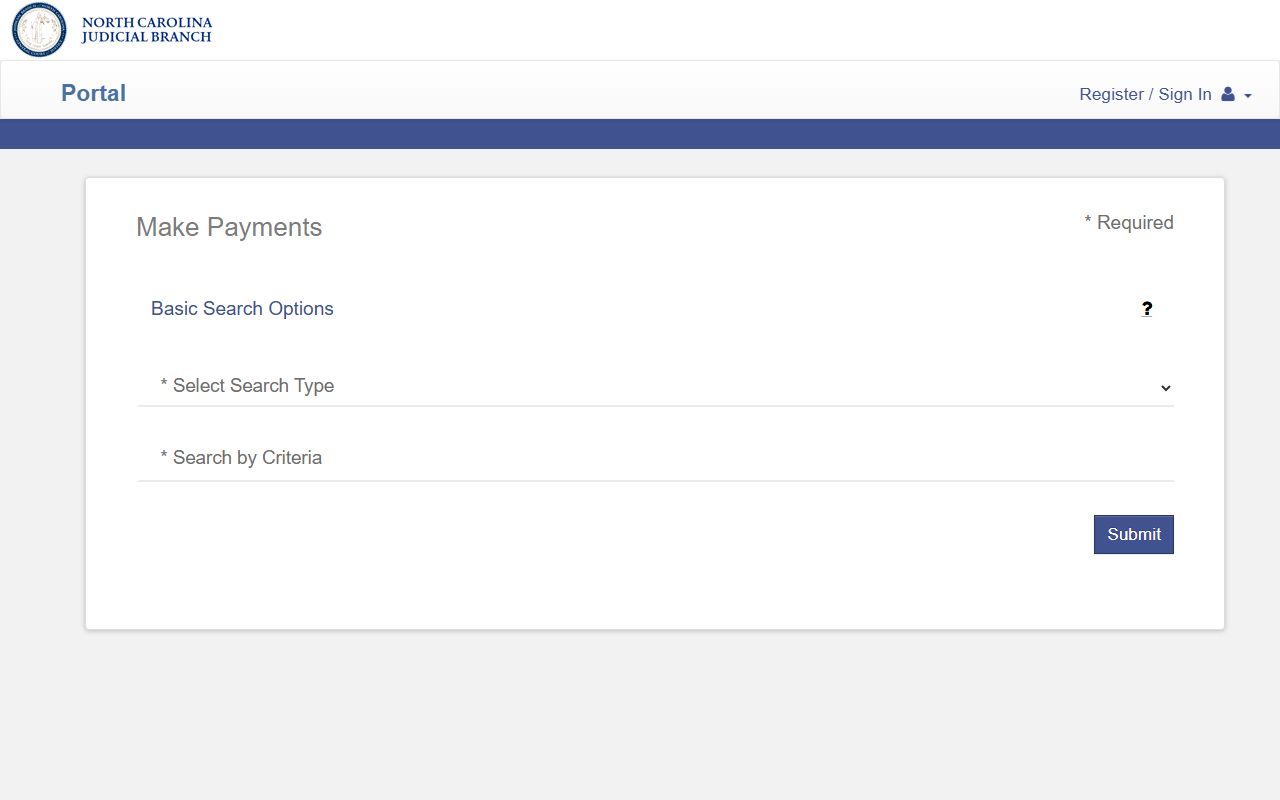
The payment dashboard is useful after docket review, but it should be checked against the case record and any required court appearance.
Read Pasquotank County Docket Entries
Common docket words should be read in context. A filing is a document submitted to the court. A motion is a request asking the court to act. An order is a judge's or clerk's written direction. A continuance means the hearing was postponed. A disposition is the result of a charge or claim. A judgment is the court's final decision or sentence. In criminal matters, a charge can appear on a docket even before guilt is decided, so a charge entry should not be treated as a conviction.
When a Pasquotank County docket entry looks incomplete, use the fallback chain. First, run Smart Search with the case number. Second, check Search Hearings for future dates. Third, use the public terminal at a clerk's office for public case information. Fourth, request paper file inspection or copies from the Pasquotank County Clerk of Superior Court for documents that are not online. This keeps the search tied to official records rather than guesses from a partial docket line.